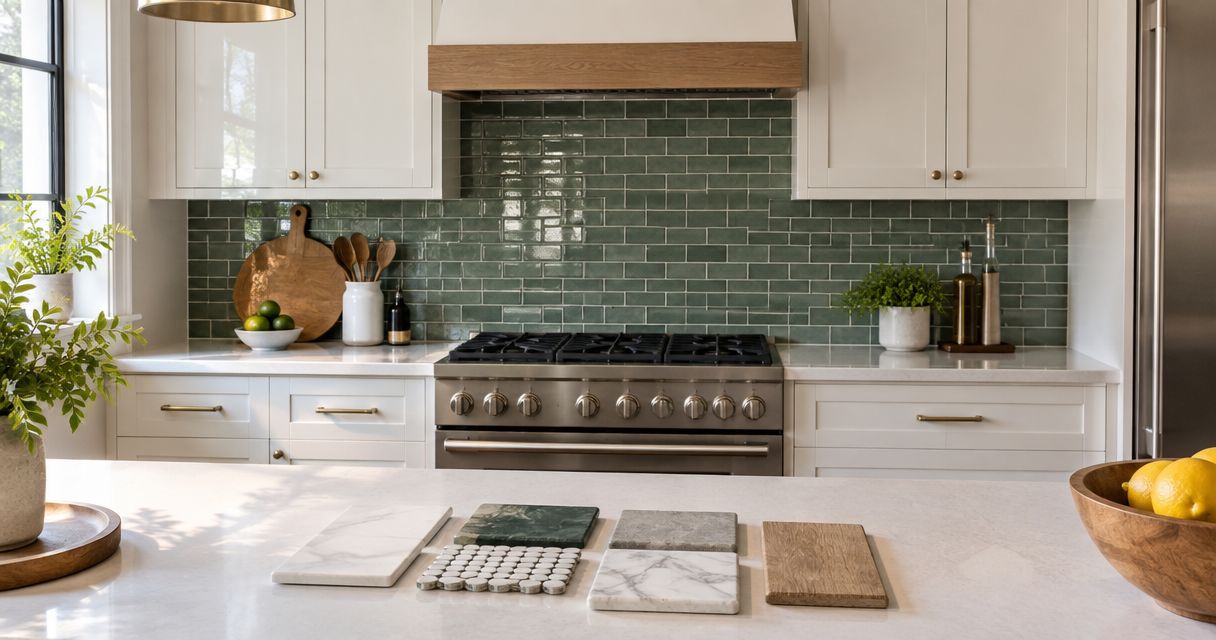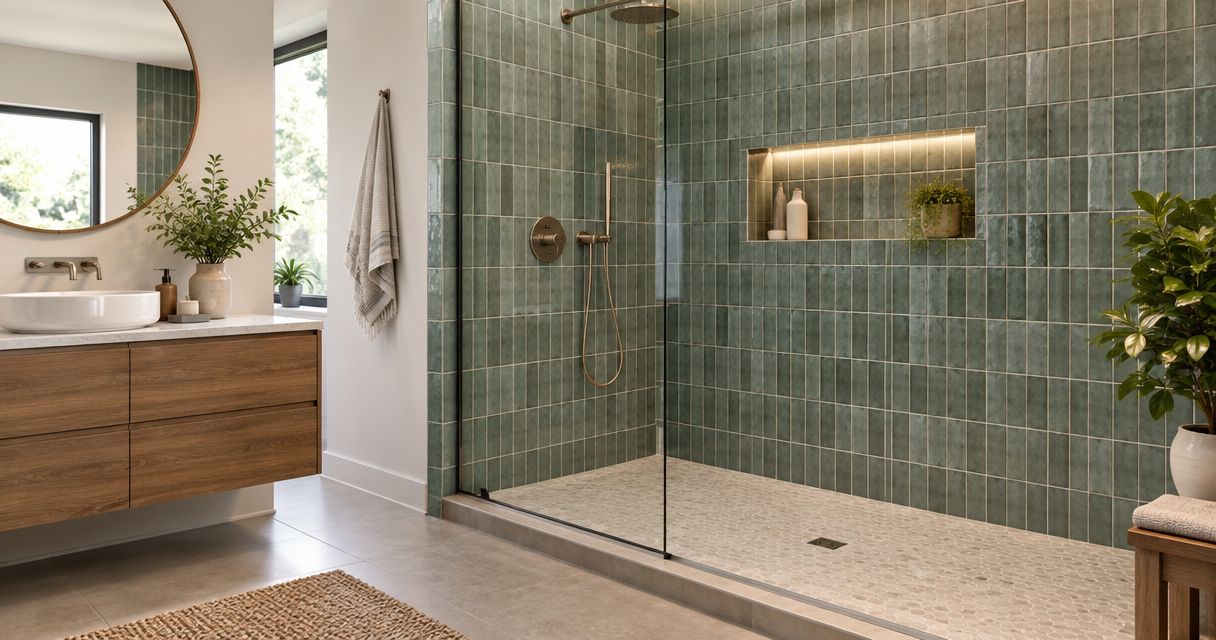
Best overall for shower walls: large-format porcelain. Best for a narrow shower: vertically stacked rectangular tile. Best for a straightforward design: ceramic subway tile. These are the best shower tile designs for bathroom remodels in 2026, with separate recommendations for sloped floors, stone-look walls, and decorative niches.
- The best shower tile designs for bathroom remodels start with large-format porcelain walls for fewer grout joints.
- Vertically stacked rectangular tile suits narrow showers; ceramic subway tile suits straightforward bathroom remodeling layouts.
- Small-format porcelain mosaics accommodate shower-floor slopes, but require more grout cleaning.
- First Choice Renovation LLC provides bathroom remodeling; discuss waterproofing, drainage, and tile layout before selecting finishes.
Why this matters
Your shower needs more than an attractive tile sample. Wall tile, floor tile, grout, waterproofing, and drainage have different jobs, and a design succeeds only when those parts work together. Choose the installation system before committing to the pattern.
First Choice Renovation LLC is best for homeowners seeking bathroom remodeling alongside repair and renovation services. Based in Casa Grande, the business serves homeowners and businesses across Pinal County. Discuss your existing shower and proposed scope with First Choice Renovation LLC before treating a tile selection as a complete remodeling plan.
A 2026 shower remodel should address what bothers you now: difficult cleaning, an awkward niche, damaged surfaces, or a layout that does not suit your routine. Keep those problems visible throughout the selection process. A decorative finish should support the solution, not distract from it.
What makes the best shower tile design?
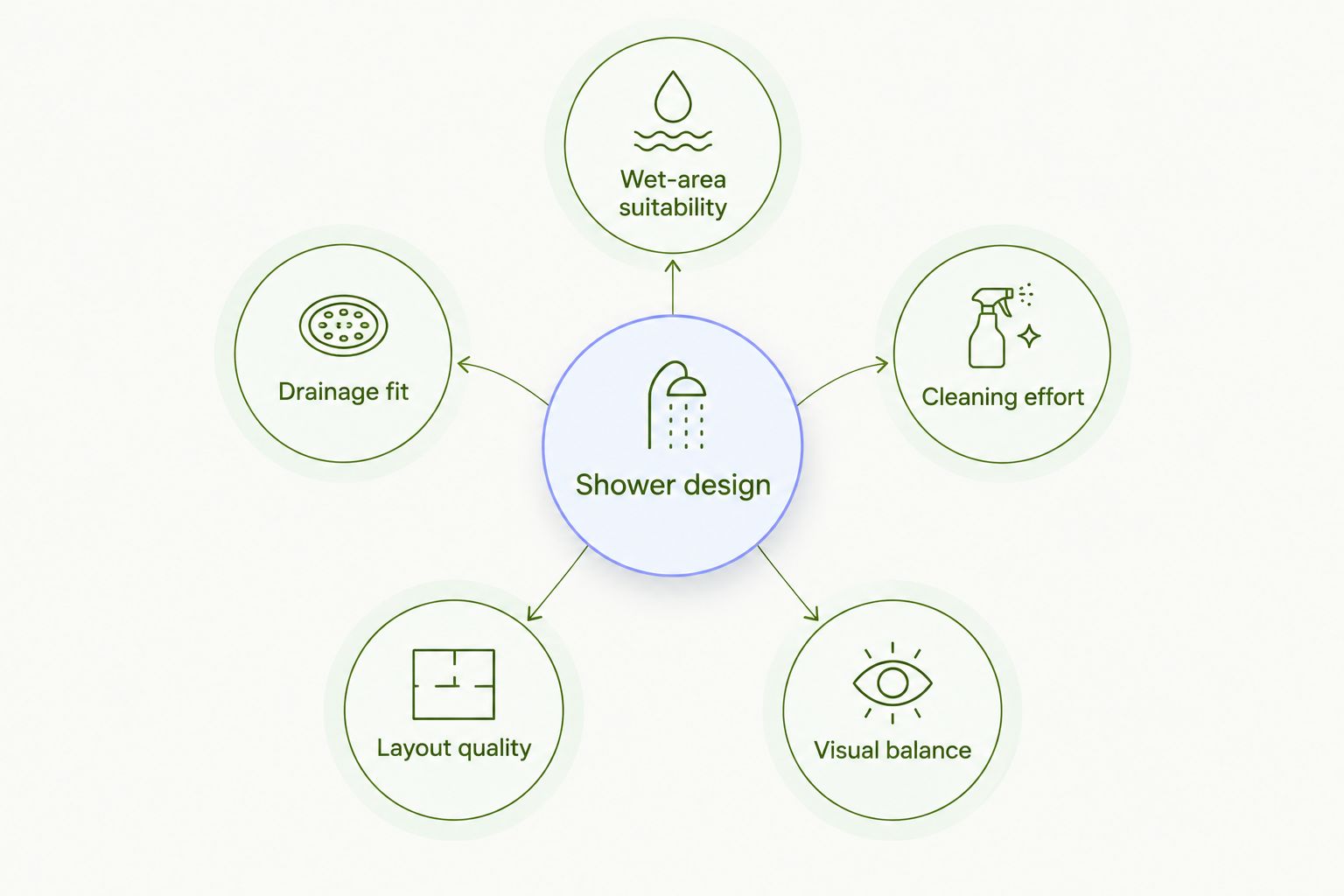
Use these criteria to compare designs before you choose a color:
- Wet-area suitability: Confirm the specific tile's intended application. A wall tile is not automatically suitable for a shower floor.
- Drainage fit: Match the floor tile format to the drain arrangement and sloped substrate. Larger pieces need more deliberate layout planning.
- Cleaning effort: Consider grout joints, surface texture, and ledges that collect residue. Fewer joints do not eliminate maintenance.
- Layout quality: Plan corners, edges, niches, and fixture openings together. Avoid leaving these details to the final installation stage.
- Visual balance: Give the shower a clear focal point. Several competing patterns make an otherwise orderly bathroom feel busy.
- Repair practicality: Ask how damaged pieces would be replaced and whether you should retain spare tile from the installation.
For your 2026 selection, compare actual samples with the vanity, fixtures, and bathroom lighting. Review the tile's technical information separately from its appearance; a showroom display does not establish shower-floor suitability.
Best shower tile designs at a glance
These recommendations cover different parts of the shower. The mosaic recommendation is for the floor; the other designs primarily address walls or accents. They are not interchangeable specifications.
| Rank and design | Best for | Standout feature | Key limitation |
|---|---|---|---|
| 1. Large-format porcelain walls | An uncomplicated main wall finish | Fewer grout joints than smaller tiles across the same area | Requires careful substrate preparation and edge planning |
| 2. Vertically stacked rectangular tile | A narrow shower needing visual height | Repeated vertical lines | Misaligned joints remain conspicuous |
| 3. Ceramic subway walls | A straightforward, adaptable layout | Simple rectangular pattern | More grout joints than large-format walls |
| 4. Small-format porcelain mosaic floor | A shower floor with changes in slope | Small pieces accommodate floor geometry | More grout to maintain |
| 5. Marble-look porcelain walls | Stone-like appearance without natural marble | Printed veining and varied faces | Repetition needs deliberate placement |
| 6. Contrasting niche tile | A restrained decorative focal point | Pattern concentrated within storage space | Adds edge and waterproofing coordination |
1. Large-format porcelain: best for uncomplicated shower walls
Large-format porcelain creates broad wall surfaces with fewer grout joints than a smaller tile covering the same area. It is the default recommendation when you want the wall finish to feel orderly rather than patterned. A rectangular format such as 12 by 24 inches is one familiar option, not a required specification.
Choose the finish and layout together. A matte appearance does not establish slip resistance, and wall suitability does not establish floor suitability. Keep this recommendation focused on shower walls unless the exact product documentation supports another application.
Large-format porcelain pros:
- Reduces the number of grout joints across a given wall area.
- Supports a quiet background for fixtures and storage.
- Works with plain colors or printed stone appearances.
Large-format porcelain cons:
- Needs a suitably prepared substrate for a consistent installation.
- Large cuts around niches and fittings need advance planning.
Best for: Homeowners who want the main shower walls to be visually simple and easier to assess for cleaning.
Before approving the layout, review where full tiles and cut pieces land. A strong design carries through the corners instead of looking balanced on only the most visible wall.
Verdict: Buy large-format porcelain for the default wall design; approve the layout before installation.
2. Vertically stacked rectangular tile: best for narrow showers
A vertical stack places rectangular tiles upright with aligned joints rather than staggered rows. The vertical lines give a narrow shower a height-focused appearance. They do not increase the shower's usable dimensions.
This design works best when the rest of the bathroom stays relatively quiet. Use the tile orientation as the feature instead of adding a competing border, a patterned floor, and contrasting grout all at once. For a 2026 remodel, choose the arrangement because it fits the space, not because it appears in a trend roundup.
Vertically stacked tile pros:
- Establishes a clear vertical rhythm.
- Makes a simple rectangular tile visually distinctive.
- Offers a focused design feature without requiring decorative imagery.
Vertically stacked tile cons:
- Aligned joints make layout inconsistencies easy to see.
- Strong grout contrast emphasizes every interruption around fixtures.
Best for: A narrow shower where you want a restrained, height-focused wall pattern.
Ask to see how the vertical joints meet the niche and controls. The arrangement should remain intentional around these features, not just on an uninterrupted sample board.
Verdict: Buy vertical stacking when visual height is the priority; skip it if you dislike a visible grid.
3. Ceramic subway tile: best for a straightforward wall layout
Ceramic subway tile is a rectangular wall-tile design that supports simple stacked or offset arrangements. A familiar example is 3 by 6 inches, although other proportions change the appearance considerably. Specify a ceramic product intended for the proposed wet-area wall installation.
This option suits a remodel where you want flexibility in fixtures and vanity finishes rather than a dominant tile statement. Grout color changes the result: a close color match softens the pattern, while contrast makes the joints part of the design.
Ceramic subway tile pros:
- Provides a clear, repeatable wall pattern.
- Supports several layouts using the same rectangular shape.
- Lets grout contrast control how prominent the pattern appears.
Ceramic subway tile cons:
- Creates more grout joints than a larger wall format.
- Exposed edges need a planned finishing detail.
Best for: Homeowners seeking an adaptable shower-wall design with a recognizable rectangular pattern.
Review the tile manufacturer's layout recommendations before choosing an offset. Also decide how the outside edges will terminate; a finished shower needs more than a decision about the field tile.
Verdict: Buy ceramic subway tile for a straightforward wall design; skip highly contrasting grout if cleaning visibility bothers you.
4. Small-format porcelain mosaic: best for sloped shower floors
Small-format mosaics divide the floor into pieces that can follow changes in the sloped surface. A 2 by 2-inch square mosaic is one common example. The appropriate format depends on the actual shower floor, drain, and product documentation.
More grout joints do not automatically make a tile safe underfoot. Surface characteristics and the complete installation matter. Select a product explicitly suitable for the shower-floor application rather than repurposing a decorative wall mosaic.
Small-format porcelain mosaic pros:
- Accommodates changes in floor geometry.
- Offers a clear distinction between wall and floor finishes.
- Allows patterns built from small individual pieces.
Small-format porcelain mosaic cons:
- Adds grout joints that require cleaning.
- Sheet edges need careful placement to avoid a visible installation grid.
Best for: Shower floors where small pieces suit the slope and drain arrangement.
Check the transition at the drain and perimeter before installation. A pleasing mosaic pattern does not compensate for drainage problems, uneven pieces, or unsuitable material.
Verdict: Buy shower-floor-rated porcelain mosaics when they fit the drainage layout; skip wall-only mosaics underfoot.
5. Marble-look porcelain: best for a stone-like wall finish
Marble-look porcelain uses a printed surface to reproduce the appearance of veining. It gives you a stone-like design without selecting natural marble itself. The distinction matters because porcelain and marble have different material-care requirements.
Judge this design from several tile faces, not one sample. Repeated markings placed together can make the printed pattern conspicuous. A successful 2026 layout coordinates the veining with the shower's corners, niche, and most visible wall.
Marble-look porcelain pros:
- Provides veining without using natural marble.
- Combines a decorative surface with larger-format options.
- Can serve as the shower's main visual feature.
Marble-look porcelain cons:
- Repeated printed faces require placement planning.
- Strong veining can compete with patterned vanity or floor finishes.
Best for: Homeowners who want a stone-like shower appearance while choosing porcelain as the tile material.
Ask to review the tile arrangement before pieces are installed. Keep nearby finishes quieter if the veining is prominent, and follow the selected product's care instructions rather than assuming every porcelain finish behaves identically.
Verdict: Buy marble-look porcelain for a stone-like focal wall; skip it when the bathroom already has competing patterns.
6. Contrasting niche tile: best for a contained decorative accent
Contrasting niche tile places a different color, shape, or pattern inside the shower's recessed storage area. The surrounding walls stay simple. This creates a focal point without committing every wall to a decorative pattern.
The niche remains part of the wet-area assembly, not merely a display opening. Its location, waterproofing, drainage, edge finish, and relationship to the wall joints need coordination. Choose the accent after those details are established.
Contrasting niche tile pros:
- Concentrates decoration in a defined area.
- Adds contrast without covering the entire shower.
- Helps distinguish storage from the surrounding wall surface.
Contrasting niche tile cons:
- Adds transitions and exposed-edge decisions.
- Detailed patterns and ledges add cleaning considerations.
Best for: A restrained shower design that needs one decorative storage feature.
Bring the bottles and accessories you expect to store into the planning conversation. A niche should serve your routine first; its decorative finish is secondary to useful placement and sound construction.
Verdict: Buy a niche accent after confirming the storage and waterproofing plan; hold the decorative choice until then.
How we ranked these shower tile designs
The 2026 ranking prioritizes wet-area suitability, drainage fit, cleaning effort, layout quality, visual balance, and repair practicality. Large-format porcelain leads as a general wall recommendation because it reduces grout joints without requiring a pronounced pattern. The remaining choices address distinct needs rather than claiming to be interchangeable winners.
This is a design-selection guide, not a product test. Confirm the exact tile's documentation and installation requirements before purchase. The floor recommendation must be evaluated separately from the wall recommendations.
Which shower tile design should you choose?
Choose large-format porcelain walls as the default, then select the floor around the actual drainage plan. Choose vertical stacking for a height-focused appearance, subway tile for a straightforward pattern, or marble-look porcelain when veining is the feature. Reserve a contrasting niche for bathrooms that need a contained accent.
Before requesting a quote, prepare photographs, approximate shower dimensions, the problems you want fixed, and your preferred samples. Ask for a scope that distinguishes surface replacement from waterproofing, plumbing changes, and repairs beneath the existing finish.
First Choice Renovation LLC offers bathroom remodeling alongside kitchen remodeling, whole-home renovations, commercial renovations, and maintenance/handyman work. Its client-reported priorities include reliable communication, showing up, craftsmanship, experience, and competitive pricing—not a lowest-price guarantee. Contact the business to discuss whether your project calls for a focused repair or a larger renovation.
Discuss your bathroom remodel
Share your shower layout, repair concerns, and preferred tile designs to discuss the scope and request a quote.
FAQ
What's the best shower tile design for a bathroom remodel?
Large-format porcelain is the default recommendation for uncomplicated shower walls. Choose the floor tile separately around the drain, slope, and documented shower-floor suitability.
Is porcelain better than ceramic for shower walls?
Neither material name alone determines the right shower-wall choice. Compare the specific products' intended applications, finishes, formats, and installation requirements; porcelain suits the large-format recommendation, while ceramic subway tile suits a straightforward rectangular layout.
Can I use large tiles on a shower floor?
Large tiles require a floor and drain layout that accommodates their dimensions. Have the installer confirm the slope geometry and product suitability before choosing them instead of small-format mosaics.
Does vertical shower tile make a small bathroom bigger?
Vertical shower tile changes the visual emphasis, not the physical size of the bathroom. Its upright lines create a height-focused pattern, while the actual shower dimensions remain unchanged.
Is marble-look porcelain the same as marble?
Marble-look porcelain is porcelain with a printed stone-like appearance, not natural marble. Follow the selected porcelain product's care instructions and review several tile faces when planning the veining.
Does shower tile provide waterproofing?
Tile and grout are not substitutes for a properly specified waterproofing assembly. The shower needs coordinated substrate preparation, waterproofing, drainage, and installation details beneath and around the finish.
Who can help plan a shower tile remodel in Casa Grande?
First Choice Renovation LLC provides bathroom remodeling services for homeowners and businesses in Casa Grande and across Pinal County. Contact the business with your existing shower details and proposed changes to discuss the work and request a quote.
One last thing
Ask for a tile layout drawing before approving the installation. It should show the drain relationship, wall cuts, niche position, and exposed edges. Finding an awkward cut on paper is simpler than reconsidering it after the tile is installed.