Best overall: porcelain tile. Best for a light-reflecting accent: glass tile. Best budget-focused option: glazed ceramic tile. The best backsplash materials for kitchen remodels match your cleaning habits, countertop, and cooking setup—not just a showroom sample.
- Porcelain tile leads the best backsplash materials for kitchen remodels when durability and routine cleaning matter most.
- Glazed ceramic tile suits straightforward kitchen renovations; glass tile suits light-reflecting accents.
- Stainless steel suits cooking-focused walls; natural stone suits homeowners willing to maintain porous surfaces.
- Quartz suits countertop coordination, but cooking-area use requires manufacturer approval.
Why this matters
A backsplash protects the wall where cooking splashes and countertop cleanup happen. The material matters, but so do grout, joints, wall preparation, and the connection to your countertop. A washable tile cannot compensate for an unsuitable installation.
For your 2026 kitchen remodel, choose the backsplash alongside the countertop rather than treating it as a final decorative purchase. That gives you time to resolve outlet positions, exposed edges, and the area behind the cooking appliance before installation begins.
First Choice Renovation LLC is a fit for Pinal County homeowners seeking kitchen remodeling services rather than materials alone. The business also handles bathroom remodeling, whole-home renovations, commercial renovations, and maintenance or handyman work.
What makes the best kitchen backsplash material?
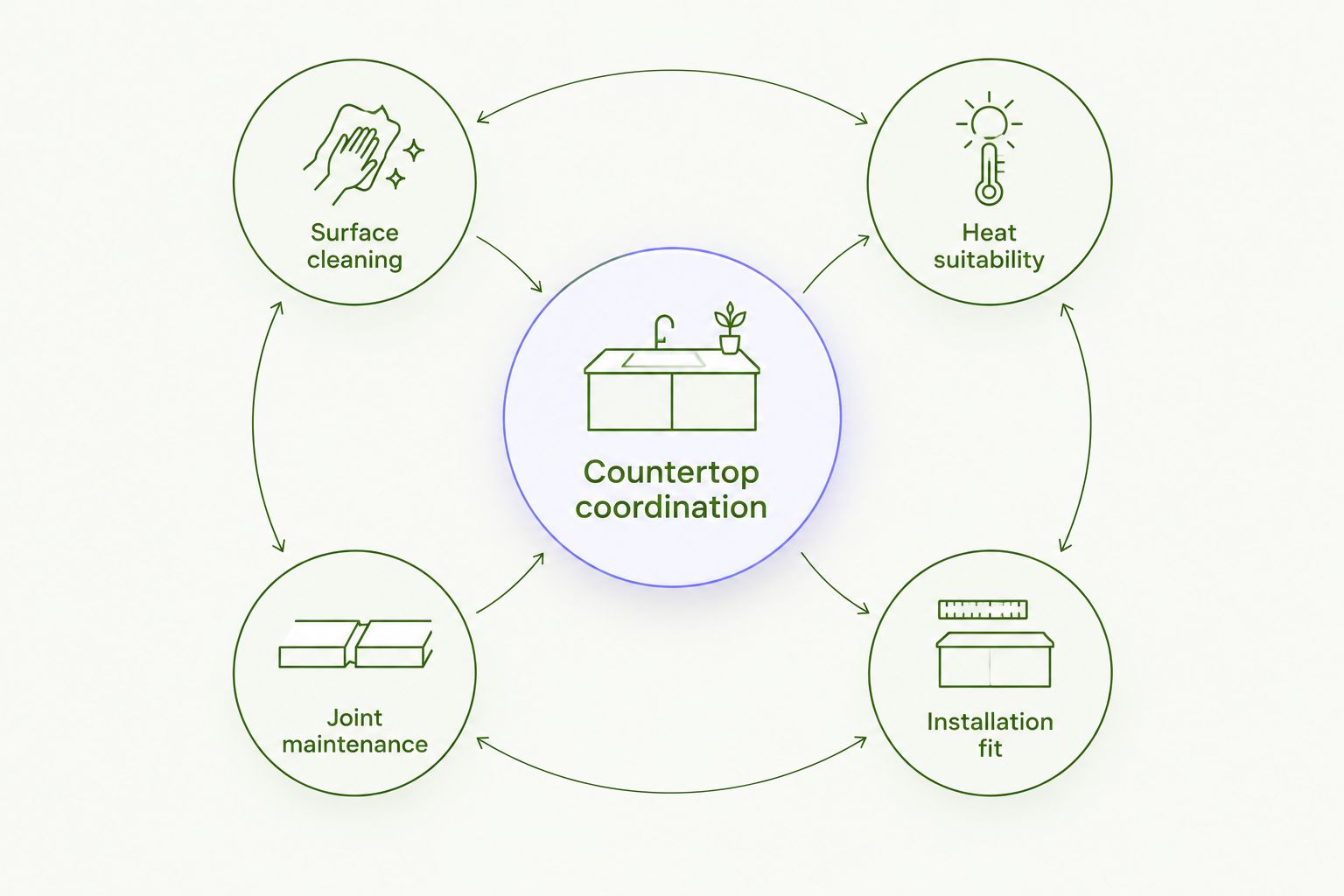
Use these criteria to compare materials before choosing a color or pattern:
- Surface cleaning: Prefer a surface you can wipe without catching grease in deep texture or decorative recesses.
- Heat suitability: Check the material, installation system, and cooking appliance requirements together.
- Joint maintenance: Compare grout lines, panel seams, and sealant joints—not just the main surface.
- Installation fit: Consider wall flatness, outlet cuts, edge finishing, and transitions at cabinets.
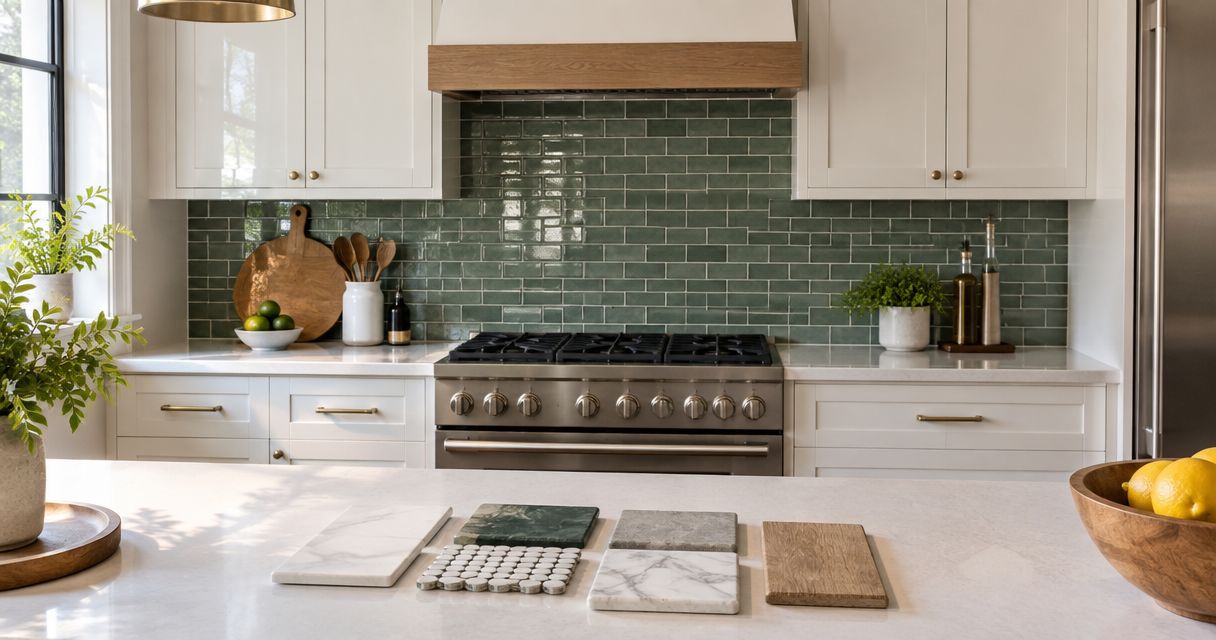
- Countertop coordination: View the backsplash beside your actual countertop sample under kitchen lighting.
For a practical 2026 comparison, bring home 3 sample tiles from your shortlisted options and inspect them under 2 lighting conditions: daylight and your kitchen's evening lighting. For strongly patterned stone or quartz, request 1 full-size sample or inspect the actual slab; a small chip does not show the overall pattern.
Best backsplash materials at a glance
The ranking below assigns each material a different use case. Porcelain tile is the default recommendation, not a claim that every kitchen needs the same finish.
| Material | Best for | Standout feature | Key limitation |
|---|---|---|---|
| Porcelain tile | Durable everyday kitchens | Dense tile body and varied finishes | Cutting and edge details require planning |
| Glazed ceramic tile | Straightforward, budget-focused updates | Washable glazed face and flexible layouts | Grout and exposed edges need attention |
| Glass tile | Light-reflecting accent walls | Reflective surface and translucent options | Substrate and adhesive can affect appearance |
| Stainless steel | Cooking-focused backsplash areas | Wipeable sheet surface | Scratches and fingerprints remain visible |
| Natural stone | Distinctive material character | Natural variation in color and pattern | Stone-specific cleaning and maintenance |
| Quartz slab | Coordinating backsplash and countertop | Matching material with fewer field joints | Heat restrictions require manufacturer review |
1. Porcelain tile: best backsplash for everyday durability
Porcelain tile is the strongest default when you want a practical backsplash without committing to natural stone maintenance. It comes in glazed finishes and formats that support either a quiet background or a more visible pattern. A smooth surface keeps routine wiping straightforward.
Choose the finish as carefully as the material. A textured porcelain tile adds relief, but that relief also creates places where cooking residue collects. Large tiles reduce the number of grout lines while increasing the importance of wall preparation and accurate cuts.
Porcelain tile pros:
- Dense tile body suited to an everyday kitchen backsplash.
- Smooth glazed options simplify surface cleaning.
- Multiple formats support different layouts and countertop styles.
Porcelain tile cons:
- Dense material requires suitable cutting tools and installation skill.
- Large formats expose wall-flatness problems and complicate outlet cuts.
Best for: Homeowners who want durability and manageable cleaning without choosing a maintenance-intensive decorative surface.
Buy: Choose smooth porcelain tile as the default, then confirm the grout, edge treatment, and cooking-area installation requirements.
2. Glazed ceramic tile: best backsplash for a straightforward update
Glazed ceramic tile works well when you want a familiar tile backsplash with a clear layout. Subway, square, and other simple shapes let you adjust the visual effect through orientation and grout color. The glaze provides a washable face; the joints still need their own maintenance plan.
A restrained layout can simplify decisions in a kitchen that already has patterned countertops or prominent cabinetry. Do not assume every ceramic tile includes matching trim. Resolve outside corners and exposed ends before placing an order.
Glazed ceramic tile pros:
- Glazed faces support routine kitchen cleaning.
- Simple shapes work with both traditional and contemporary cabinets.
- Layout and grout choices offer flexibility without changing materials.
Glazed ceramic tile cons:
- Numerous grout lines add cleaning surfaces.
- Chips and unfinished edges can expose a different-colored tile body.
Best for: Homeowners planning a straightforward backsplash update with a clearly defined installation scope.
Buy: Choose glazed ceramic tile when the layout is simple and the finished edges are specified. Avoid selecting a tile on its face alone.
3. Glass tile: best backsplash for a light-reflecting accent
Glass tile makes the backsplash more reflective than an opaque tile surface. Translucent options also reveal the effect of the adhesive and background beneath them. That makes installation preparation part of the finished appearance, not merely a hidden construction step.
For a 2026 kitchen refresh, test glass beside your countertop before selecting it for an entire wall. Reflections can emphasize task lighting and nearby colors. Small mosaics add pattern but also create many grout joints, so reflectivity does not automatically mean easier cleaning.
Glass tile pros:
- Reflective surfaces create a distinct visual accent.
- Nonporous tile faces wipe clean.
- Translucent and opaque options produce different effects.
Glass tile cons:
- Adhesive choice, coverage, and substrate appearance affect translucent installations.
- Small mosaics create more joints to maintain.
- Cutting demands care to avoid visible damage.
Best for: Homeowners who want the backsplash to act as a light-reflecting feature rather than a quiet background.
Buy: Choose glass tile after approving a sample installation with the intended adhesive and grout, not just a loose tile.
4. Stainless steel: best backsplash for a cooking-focused wall
Stainless steel suits the area where easy surface wiping matters more than tile pattern. A sheet installation replaces a tiled field with a metal surface, although perimeter joints and cutouts still require detailing. The result works especially well when you prefer a functional appearance.
Look closely at the finish. Reflections, fingerprints, and scratches become part of the visible surface. Stainless steel itself tolerates heat, but that does not remove the need to follow appliance clearances and installation requirements.
Stainless steel pros:
- Nonporous metal surface supports routine wiping.
- Sheet installations avoid grout across the main field.
- A plain finish keeps the focus on the cooking area.
Stainless steel cons:
- Fingerprints, water marks, and scratches remain noticeable.
- Outlet openings, edges, and seams need accurate fabrication.
Best for: Homeowners prioritizing a practical cooking-zone backsplash over decorative tile detail.
Buy: Choose stainless steel if you accept visible wear and want a wipeable surface. Specify edge finishing and cleaning instructions before installation.
5. Natural stone: best backsplash for individual material character
Natural stone brings variation that manufactured finishes reproduce but do not duplicate exactly. Marble, granite, and other stones have different properties, so the stone name matters. Treating all natural stone as one interchangeable material leads to poor maintenance decisions.
Marble and limestone are sensitive to acidic substances, which can etch their surfaces. Sealing addresses absorption; it does not make acid-sensitive stone immune to etching. Textured or split-face stone also makes grease removal more demanding than a smooth finish.
Natural stone pros:
- Natural color and pattern variation give the backsplash individual character.
- Smooth finishes allow a calmer appearance than deeply textured stone.
- Stone can coordinate with other natural materials in the kitchen.
Natural stone cons:
- Cleaning and sealing requirements vary by stone.
- Acid-sensitive stones need protection from unsuitable cleaners and splashes.
- Rough surfaces make routine wiping harder.
Best for: Homeowners who value natural variation and accept stone-specific care.
Hold: Approve the actual material, finish, and maintenance instructions before choosing natural stone. Skip rough texture when easy grease removal is your priority.
6. Quartz slab: best backsplash for countertop coordination
Engineered quartz can continue a countertop's appearance onto the wall. A slab backsplash reduces field joints compared with small tile, although seams, corners, and perimeter connections remain. Pattern placement becomes especially important when the material has prominent veining.
For a 2026 remodel, review cooking-area suitability before committing to quartz behind the appliance. Engineered quartz contains resin and is not interchangeable with natural stone or porcelain. The material manufacturer's instructions and appliance requirements determine whether the proposed arrangement is suitable.
Quartz slab pros:
- Coordinates directly with a quartz countertop selection.
- Large panels reduce the number of field joints.
- Nonporous surfaces support routine cleaning.
Quartz slab cons:
- Heat restrictions require material-specific review.
- Large panels need planned fabrication, handling, and cutouts.
- Vein alignment and seams affect the finished appearance.
Best for: Homeowners prioritizing a coordinated countertop-and-backsplash design.
Hold: Choose quartz only after confirming the material is approved for the proposed cooking-area installation.
How the materials rank
Porcelain leads on the balance of surface care, durability, and design flexibility. Ceramic earns the straightforward-update slot; glass earns the reflective-accent slot. Stainless steel, natural stone, and quartz solve more specific design or maintenance needs.
These recommendations compare material characteristics, not installation test results or contractor performance. Your final choice still depends on the exact finish, product instructions, wall condition, and appliance requirements.
Turn your selection into a clear installation scope
Before requesting a quote, describe the work as a finished installation rather than a tile purchase. First Choice Renovation LLC handles small repairs as well as full remodels, so distinguish a backsplash-only update from a broader kitchen renovation.
Include these decisions in your scope:
- Wall preparation: Identify existing finishes to remove and damaged areas to repair.
- Coverage: State where the backsplash starts, stops, and changes height.
- Finished edges: Specify exposed ends, corners, and cabinet transitions.
- Outlet coordination: Confirm how cutouts and any required electrical adjustments will be handled.
- Countertop joints: Follow the specified movement-joint detail rather than assuming every joint takes grout.
- Work sequence: Agree on dependencies, site access, and communication before work begins.
The client-reported reasons homeowners choose First Choice Renovation LLC include reliable communication, showing up, craftsmanship, and experience. Ask for a scope that makes those priorities concrete: included tasks, material responsibilities, and a clear point of contact.
Discuss your kitchen remodeling project
Contact First Choice Renovation LLC about a backsplash update or broader kitchen renovation.
Which backsplash material should you choose?
Choose smooth porcelain tile if you are undecided. It offers the clearest balance of everyday cleaning, durability, and design choice. Choose ceramic for a straightforward update, glass for reflection, or stainless steel for a cooking-focused surface.
Choose natural stone because you want its character and accept its care requirements—not because sealing promises maintenance-free use. Choose quartz for coordinated surfaces only after confirming heat suitability. In 2026, the right backsplash remains the material that fits your actual kitchen and installation plan.
FAQ
What's the best backsplash material for a kitchen remodel?
Smooth porcelain tile is the best default backsplash material for everyday kitchen use. It balances durability, cleaning, and design flexibility, provided the installation and cooking-area requirements are satisfied.
Is porcelain or ceramic better for a kitchen backsplash?
Porcelain is the stronger default for durability, while glazed ceramic suits straightforward backsplash updates. Both need suitable grout, finished edges, and proper wall preparation.
What's the easiest kitchen backsplash to clean?
A smooth, nonporous surface with few joints is easier to wipe than a deeply textured surface with many grout lines. Compare stainless steel sheets, smooth tile, and suitable slab materials against your cooking-area requirements.
Can I use quartz behind my stove?
Use quartz behind a cooking appliance only when the material manufacturer approves the arrangement and the appliance requirements are met. Engineered quartz has heat limitations that differ from porcelain and natural stone.
Does a natural stone backsplash need sealing?
Sealing requirements depend on the specific stone and its finish. Follow the supplier's care instructions, and remember that sealing does not prevent acid etching in marble or limestone.
Should my backsplash match my countertop?
Your backsplash should coordinate with your countertop, but it does not need to match it. Compare samples together and avoid competing patterns unless that contrast is intentional.
Can I replace my backsplash without remodeling the whole kitchen?
A backsplash-only update is possible when the surrounding kitchen can remain in place. Wall repairs, countertop protection, outlet work, and edge details still need to be included in the scope.
Who should I contact for kitchen remodeling in Pinal County?
First Choice Renovation LLC provides kitchen remodeling and other renovation services for homeowners and businesses across Pinal County. Contact the business to discuss whether your project involves a backsplash update, repairs, or a broader remodel.
One last thing
Ask to see the exposed edge before approving the backsplash. A tile's face can look right while its unfinished side looks wrong beside a doorway or cabinet. Resolving that detail before installation is more useful than discovering it after the wall is covered.