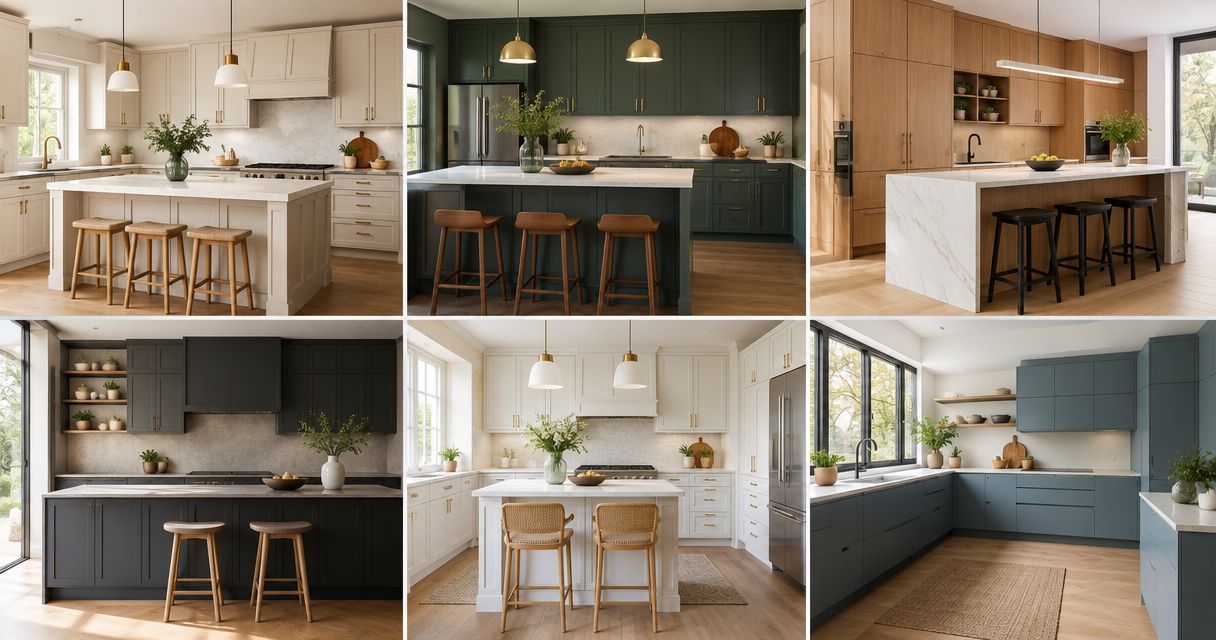
Best overall: Shaker. Best for easy-clean modern kitchens: slab. Best for cottage character: beadboard. The best kitchen cabinet styles 2026 homeowners should consider also include raised-panel doors for traditional rooms and glass-front doors for selective display; choose by maintenance, storage, and the surrounding finishes rather than trend labels.
- For best kitchen cabinet styles 2026, Shaker is the default recommendation for adaptable kitchen design.
- Slab cabinet doors suit modern kitchens and have fewer decorative recesses to clean.
- Raised-panel and beadboard doors add detail but require more attention during cleaning.
- Glass-front cabinets work best as selective display storage, not a replacement for concealed storage.
- First Choice Renovation LLC provides kitchen remodeling for homeowners in Casa Grande, Arizona.
Why this matters
Cabinet doors repeat across your kitchen, so their shape affects the whole room. A detailed door can compete with a patterned countertop; a plain door can give that countertop room to stand out.
First Choice Renovation LLC is a kitchen remodeling option for Pinal County homeowners who need cabinet updates coordinated with a wider renovation. Discuss your layout, existing cabinet condition, and preferred finishes with First Choice Renovation LLC before treating replacement doors as the complete solution.
For a 2026 remodel, separate appearance from function. New fronts do not fix damaged cabinet boxes, awkward drawer placement, or an appliance opening that does not fit your plans.
What makes the best kitchen cabinet styles?
Use these criteria to judge the door samples you actually intend to install:
- Cleaning effort: Look for grooves, ledges, and trim that interrupt a wiping pass.
- Visual fit: Match the door profile to your countertop, flooring, hardware, and adjacent rooms.
- Storage privacy: Decide what belongs behind solid doors and what deserves display space.
- Construction fit: Confirm how the selected fronts work with the cabinet boxes, hinges, and openings.
- Scope discipline: Distinguish a finish update from a project that changes storage or layout.
- Sample quality: Inspect a physical sample, including edges, joints, finish, and hardware operation.
Door style is only part of the specification. Shaker describes a door design; inset describes a door fitted within the cabinet frame. You can combine those choices, so do not compare them as mutually exclusive styles.
Kitchen cabinet styles at a glance
| Rank and style | Best for | Standout feature | Key limitation |
|---|---|---|---|
| 1. Shaker | Adaptable, transitional kitchens | Framed door with a recessed center panel | Frame edges need cleaning |
| 2. Slab | Easy-clean modern kitchens | Flat, uninterrupted door face | Offers little decorative detail |
| 3. Raised-panel | Traditional rooms with architectural detail | Raised center surrounded by shaped edges | More contours to clean |
| 4. Beadboard | Cottage-style kitchens | Repeated narrow grooves | Grooves complicate wiping |
| 5. Glass-front | Selective display storage | Visible contents behind glazing | Contents and glass need attention |
These are design recommendations, not a ranking of cabinet manufacturers. Compare construction and installation separately from the door profile.
1. Shaker: best kitchen cabinet style for adaptable design
Shaker doors use a frame around a recessed center panel. Their restrained detail works with both traditional and modern supporting finishes, making Shaker the default recommendation when you want flexibility rather than a strongly themed room.
A conventional five-piece Shaker door has 2 vertical stiles, 2 horizontal rails, and 1 center panel. That description explains its construction; it does not establish the material or quality of a particular cabinet.
For a 2026 kitchen, compare frame width as carefully as color. A wider frame creates a stronger outline, while a narrower frame gives the door a lighter appearance. Inspect the profile where the frame meets the panel, because that edge affects cleaning.
Shaker pros:
- Adapts to several countertop and hardware combinations.
- Adds definition without an elaborate door profile.
- Provides concealed storage for everyday kitchen contents.
Shaker cons:
- Frame edges create more cleaning detail than a slab face.
- Different frame proportions produce noticeably different results.
Best for: Homeowners who want a balanced cabinet design without committing to a highly decorative or minimal look.
Verdict: Buy Shaker for the most adaptable starting point.
2. Slab: best kitchen cabinet style for easy-clean modern rooms
Slab doors have a flat face without a framed center panel. They give you an uninterrupted surface and place more visual emphasis on the finish, handles, and alignment between doors.
Choose slab when you want cabinetry to read as a quiet background. It works especially well when another feature, such as a patterned countertop, already provides visual detail.
Slab pros:
- Has fewer decorative recesses to wipe.
- Keeps the cabinet profile visually simple.
- Allows material and hardware choices to carry the design.
Slab cons:
- Provides little of the detailing associated with traditional cabinetry.
- Fingerprint visibility depends on the selected surface and sheen.
A flat face does not mean maintenance-free. Inspect the actual finish for marks, edge quality, and cleaning instructions rather than assuming every slab door behaves alike. Handle placement also matters: frequent contact with the door face changes where marks collect.
Best for: Homeowners who prefer modern design and fewer decorative cleaning obstacles.
Verdict: Buy slab when a simple profile and straightforward wiping matter most.
3. Raised-panel: best kitchen cabinet style for traditional detail
Raised-panel doors have a center panel that projects relative to its surrounding profile. Shaped edges create depth and shadow, giving the cabinetry a more decorative appearance than Shaker or slab.
Use raised-panel doors when you want the cabinets to contribute to a traditional room. Compare their contours with nearby trim and other architectural details so the kitchen feels intentional rather than crowded.
Raised-panel pros:
- Adds visible depth to solid cabinet doors.
- Suits a deliberately traditional design direction.
- Keeps stored items concealed behind a decorative front.
Raised-panel cons:
- Detailed edges require more careful cleaning.
- Strong profiles can compete with busy surfaces elsewhere.
For your 2026 selection, examine the whole door rather than just the center panel. A heavily shaped frame produces a different effect from a restrained frame around a gently raised center. Pair a detailed sample with your actual countertop sample before approving either.
Best for: Homeowners maintaining a traditional kitchen with complementary architectural detail.
Verdict: Buy raised-panel for a deliberate traditional scheme; skip it for a minimal room.
4. Beadboard: best kitchen cabinet style for cottage character
Beadboard doors feature repeated narrow grooves that create a lined surface. They give cabinet fronts a more textured appearance and support a cottage-style design direction.
Use the pattern deliberately. Repeating grooves across every cabinet front creates a stronger visual statement than using beadboard on a limited part of the kitchen.
Beadboard pros:
- Establishes a recognizable cottage character.
- Adds texture without relying on exposed storage.
- Can distinguish a selected cabinet area from simpler fronts.
Beadboard cons:
- Grooves require more attention than a flat surface.
- Repetition can compete with patterned flooring or backsplash tile.
Consider where cooking splashes and frequent hand contact occur. A grooved sample deserves a practical cleaning review, not just approval under showroom lighting. Check that you are comfortable following the finish manufacturer's care instructions around those recesses.
Best for: Homeowners who specifically want cottage character and accept the cleaning detail.
Verdict: Buy beadboard for intentional texture; skip it when low-detail cleaning is the priority.
5. Glass-front: best kitchen cabinet style for selective display
Glass-front doors replace some or all of a solid panel with glazing. They reveal the cabinet contents, so the arrangement inside becomes part of the kitchen's appearance.
Use glass-front cabinets for items you genuinely want visible. Keep everyday packaging, mixed containers, and other visually busy supplies behind solid doors when concealed storage better serves your routine.
Glass-front pros:
- Displays selected dishes without leaving them on open shelves.
- Breaks up a continuous run of solid cabinet fronts.
- Makes the chosen contents visible while the door stays closed.
Glass-front cons:
- Clear glass reveals clutter as well as display pieces.
- Glass adds another surface that needs cleaning.
Compare clear and obscured glazing before deciding. Clear glass emphasizes the contents; obscured glass reduces their visibility but does not turn the door into solid concealed storage. Review the cabinet interior finish because it remains part of the view.
Best for: Homeowners who want a dedicated display area alongside practical concealed storage.
Verdict: Buy glass-front selectively; skip an all-display approach if you need storage privacy.
Coordinate the fronts with the whole kitchen
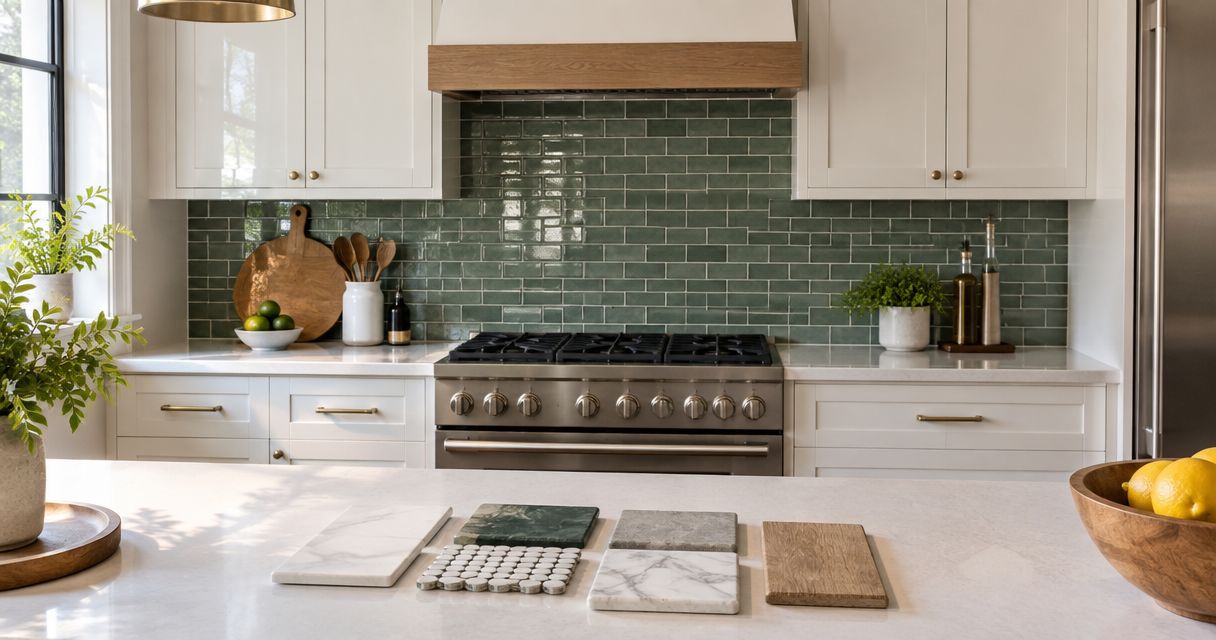
A cabinet sample should not win approval in isolation. Put the door beside the proposed countertop, flooring, backsplash, and handle so you can judge the combined effect.
A restrained door can balance a detailed surface. Conversely, a textured or shaped door benefits from surrounding choices that do not fight for attention. Neither approach requires every material to match.
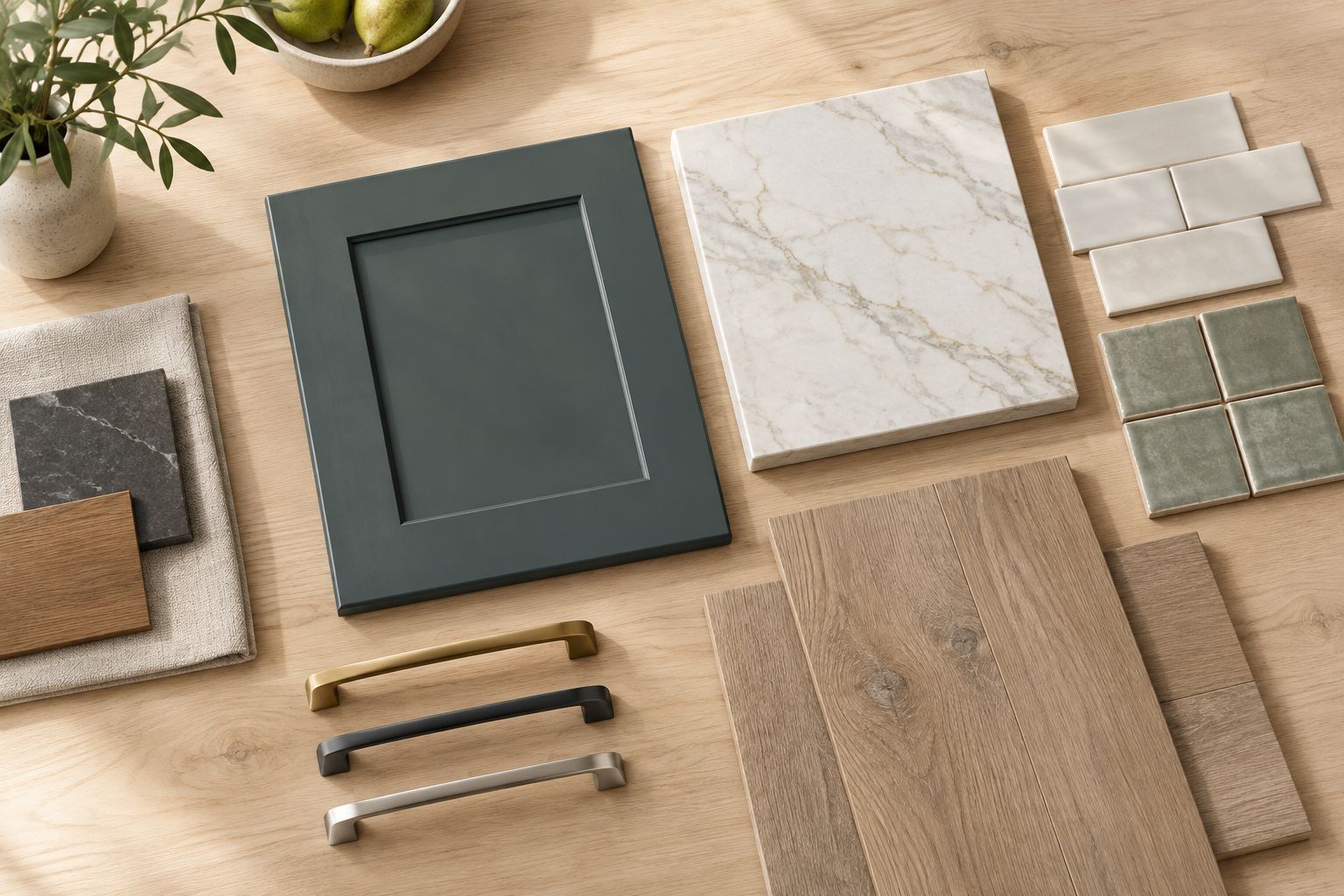
Review samples in the kitchen itself, including under the lighting you use in the evening. Ask which surfaces are included in the proposed work: doors, drawer fronts, exposed cabinet ends, and trim do not automatically receive identical treatment.
Decide the scope before requesting a quote
Use this sequence to turn a preferred style into a useful project brief:
- Check condition: Identify damaged boxes, loose hardware, worn surfaces, and storage frustrations.
- Choose profile: Select the door style that fits your cleaning habits and design direction.
- Compare samples: Review the cabinet front alongside the surrounding finishes.
- Define scope: List what stays, what changes, and which adjacent work needs coordination.
- Request quote: Ask for a written description of the included work and exclusions.

First Choice Renovation LLC handles small repairs as well as full remodels. The business emphasizes reliable communication, showing up, craftsmanship, experience, and competitive pricing; competitive positioning is not a lowest-price guarantee.
For a 2026 quote request, describe the result you need rather than sending only an inspiration photograph. Explain whether you want better access, additional concealed storage, a changed layout, or simply a different appearance.
Discuss your kitchen cabinet project
Ask First Choice Renovation LLC about cabinet updates and the scope of your kitchen remodel.
How the styles were ranked
Shaker takes the default position because its restrained detail supports several design directions. Slab leads for fewer decorative cleaning obstacles, while raised-panel, beadboard, and glass-front each serve a more specific visual or storage purpose.
The ranking uses profile, cleaning effort, storage privacy, and fit with surrounding finishes. It does not assign durability or installation quality based on appearance alone.
Which kitchen cabinet style should you choose?
Choose Shaker if you are undecided. It gives you a defined cabinet face without requiring a strongly traditional or minimal kitchen.
Choose slab if easy wiping and modern simplicity are your priorities. Choose raised-panel for traditional detail, beadboard for cottage texture, and glass-front for a selected display area.
The best cabinet decision in 2026 is the one that fits your daily use and the actual condition of your kitchen. Settle those questions before approving the finish.
FAQ
What's the best kitchen cabinet style for 2026?
Shaker is the default recommendation for an adaptable kitchen cabinet design in 2026. Choose slab instead when a flat modern profile and fewer decorative cleaning recesses are your priorities.
Are Shaker cabinets better than slab cabinets?
Shaker cabinets are better for restrained framed detail; slab cabinets are better for an uninterrupted modern face. Compare actual samples because finish, construction, and installation are separate from style.
Which cabinet doors are easiest to wipe clean?
Slab doors have fewer decorative recesses to wipe than framed, raised-panel, or beadboard doors. The selected finish still determines the appropriate cleaning method.
Can I change cabinet doors without replacing the boxes?
Door replacement is an option when the existing boxes are suitable for retention and the new fronts fit correctly. Have the condition, openings, hinges, and exposed surfaces assessed before defining the work.
Are inset cabinets the same thing as Shaker cabinets?
Inset describes doors fitted within the cabinet frame, while Shaker describes a framed door with a recessed center panel. A cabinet can have both inset construction and Shaker-style doors.
Should every kitchen cabinet have a glass front?
Use glass-front doors selectively when you want display storage. Solid fronts are the better choice for items you prefer to keep concealed.
How do I request a kitchen cabinet remodeling quote?
Contact First Choice Renovation LLC with photographs, your preferred door style, and a description of what you want changed. Identify layout and storage concerns so the discussion covers more than cabinet appearance.
One last thing
Open the drawer before approving the door. A cabinet front can match your preferred look while the storage behind it remains awkward to use. Bring that functional problem into the scope now, rather than treating it as a separate concern after the appearance is settled.