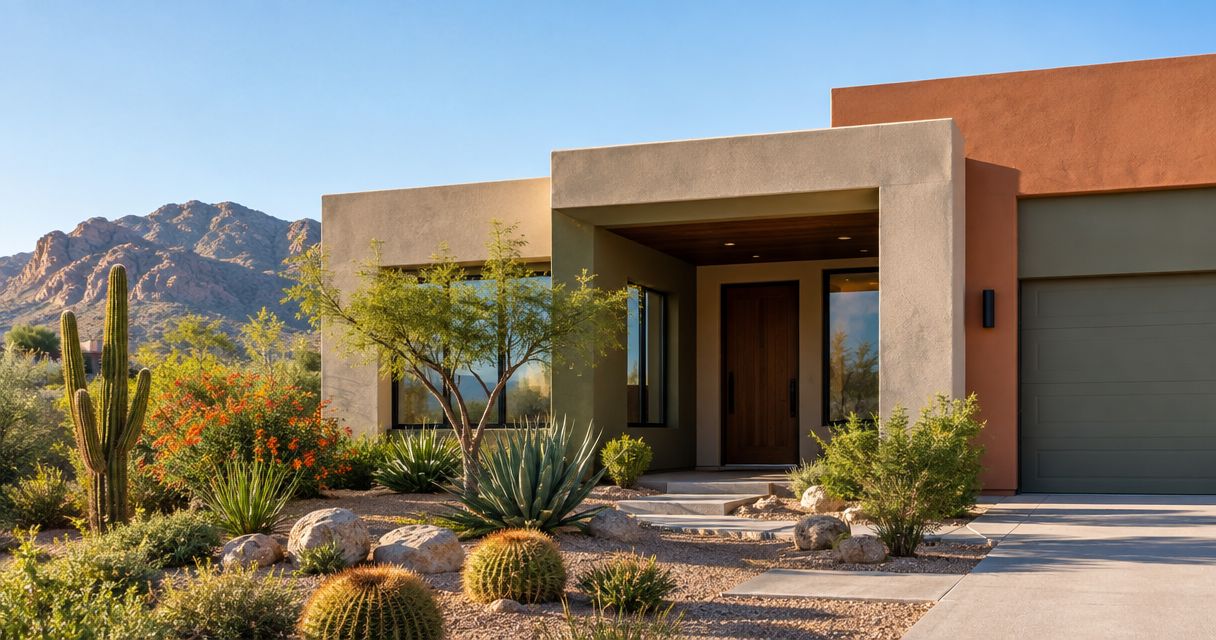
Best overall: warm off-white. Best for warm-toned roofing: sand beige. Best budget-minded choice: a light neutral that retains your existing undertone. The best exterior paint colors for desert climates in 2026 balance sunlight, fixed materials, and maintenance—not just the color on a sample card.
- Warm off-white leads the best exterior paint colors for desert climates when glare and roof undertones are checked.
- Sand beige suits warm roofing; light greige suits mixed stone and concrete finishes.
- Muted sage works as a restrained accent; terracotta belongs on smaller architectural features.
- First Choice Renovation LLC is a fit for Pinal County homeowners coordinating repairs with renovation planning.
Why this matters
Desert sunlight changes how an exterior color reads. A pale neutral can look nearly white in direct sun and noticeably warmer under a covered entry. Your roof, stone, and concrete also influence whether that same paint looks coordinated or out of place.
Choose the wall color around the materials you are keeping. For homeowners and businesses in Pinal County, First Choice Renovation LLC provides remodeling, renovation, and handyman services. If exterior improvements are part of a larger project, discuss the repair needs and requested scope before treating color selection as the final decision.
For a 2026 exterior update, separate appearance from coating performance. Color affects the look of the building; surface preparation, coating suitability, and application conditions affect the finished paint system.
What makes the best exterior paint colors for desert climates
Use these criteria before comparing the ranked options:
- Solar reflectance: Lighter conventional finishes generally absorb less sunlight than darker ones. Color alone does not establish a coating's thermal performance.
- Fixed-material compatibility: Match the undertones of roofing, stone, masonry, and paving that will remain.
- Glare control: Compare a light wall color in full sun and shade before selecting a bright white.
- Maintenance appearance: Check how contrast with local dust and existing surface marks affects the look you want.
- Architectural contrast: Give walls, trim, and doors clear roles rather than making every surface equally prominent.
- Project fit: Check association requirements, surface condition, and coating specifications before committing.
Light reflectance value, or LRV, uses a 0–100 scale to describe visible-light reflectance. It is useful for comparing paint samples, but it is not the same as total solar reflectance. Do not interpret an LRV number as a promised reduction in indoor temperature or energy use.
Desert exterior colors at a glance
These are color families, not named paint products. Compare actual samples within each family because undertones and reflectance differ between formulations.
| Rank and color family | Best for | Standout feature | Key limitation |
|---|---|---|---|
| 1. Warm off-white | A versatile main wall color | Light appearance without choosing a stark white | Can look yellow beside cool finishes |
| 2. Sand beige | Warm tile roofs and earth-toned masonry | Connects walls with warm fixed materials | Can blend too closely with the roof |
| 3. Light greige | Mixed stone, concrete, and warm finishes | Bridges gray and beige elements | Some samples read lavender or green |
| 4. Pale taupe | Refreshing an existing brown-based palette | Retains a muted brown-gray relationship | Darker versions undermine a light-wall scheme |
| 5. Muted sage | Restrained doors and architectural accents | Adds color without a vivid contrast | Green undertones can clash with nearby stone |
| 6. Terracotta | Small accents beside light walls | Gives earthy color a defined focal role | Broad applications create a darker exterior |
1. Warm off-white: best desert exterior color for main walls
Warm off-white is the default starting point for a light desert exterior. It gives the main wall a quiet role while allowing the roof, entry, and landscaping to remain visible. Choose a restrained undertone rather than assuming every cream shade will work.
For your 2026 shortlist, compare warm off-white against both the roof and the shaded entry. A sample that feels balanced in sunlight can look more yellow under an overhang.
Warm off-white pros:
- Provides a light main-wall direction.
- Pairs with many earth-toned materials.
- Leaves room for a darker entry accent.
Warm off-white cons:
- Can look yellow beside blue-gray stone.
- Can create more brightness than you want on exposed walls.
Best for: Homeowners choosing a versatile main-wall color before selecting accents.
Verdict: Buy into warm off-white as the default shortlist—not as an untested final selection.
2. Sand beige: best desert exterior color for warm roofing
Sand beige is the stronger starting point when your roof and masonry already carry warm brown, tan, or red undertones. The goal is coordination, not an exact match. A wall that closely matches the roof can make the building's separate surfaces harder to distinguish.
Keep the wall sample visibly lighter than the roof if you want a clear relationship between them. Check it beside the actual roofing rather than relying on a photograph.
Sand beige pros:
- Connects with warm fixed materials.
- Creates an earth-toned exterior palette.
- Supports cream trim and darker brown accents.
Sand beige cons:
- Can look muddy when the undertone is too dark.
- Offers little contrast when roof and walls are similar.
Best for: Properties where warm roofing is the dominant permanent finish.
Verdict: Buy into sand beige when the roof sets a warm direction; skip samples that disappear against it.
3. Light greige: best desert exterior color for mixed finishes
Light greige combines a gray appearance with a beige undertone. Use it when your exterior contains both warm and cool elements, such as brown roofing alongside gray paving. It gives you a middle ground without forcing every finish into one color temperature.
The label alone is not enough. Different greige samples can reveal green, pink, or lavender undertones when placed beside your building materials.
Light greige pros:
- Bridges warm and cool exterior elements.
- Supports a restrained contemporary palette.
- Works as a quiet background for stronger accents.
Light greige cons:
- Undertones can become conspicuous beside stone.
- A sample that is too gray can feel disconnected from warm roofing.
Best for: Homes and commercial properties with mixed stone, concrete, and roofing colors.
Verdict: Buy into light greige for mixed finishes; hold the final choice until you compare it beside every dominant material.
4. Pale taupe: best desert exterior color for an existing brown palette
Pale taupe is a muted brown-gray direction for an exterior that already has brown trim or masonry. It is especially useful when you want a lighter appearance without replacing the palette's underlying character. Keeping that relationship is the budget-minded approach here—not a claim that one paint color costs less.
Before deciding, identify which trim and fixed finishes will remain. A color refresh and a full palette change are different project scopes.
Pale taupe pros:
- Retains a connection with brown-based finishes.
- Gives a softer alternative to strong beige.
- Supports a restrained refresh rather than a complete visual reset.
Pale taupe cons:
- Darker samples absorb more sunlight than comparable lighter conventional finishes.
- Brown-gray combinations can look flat without trim contrast.
Best for: Owners retaining an existing brown-based exterior scheme.
Verdict: Buy into pale taupe for continuity; skip deeper shades when your priority is a lighter main wall.
5. Muted sage: best desert exterior color for restrained accents
Muted sage adds a gray-green note to doors or selected architectural details. Keep the main walls neutral if you want the accent to remain deliberate rather than dominate the building. Compare the green directly with nearby stone and landscaping.
Sage is not automatically compatible with every natural material. Warm pink or orange stone can make an otherwise subdued green appear more pronounced.
Muted sage pros:
- Adds color to a neutral exterior.
- Gives an entry a distinct role.
- Creates a quieter alternative to vivid green.
Muted sage cons:
- Can clash with pink or orange masonry.
- Loses its accent role when used across too many surfaces.
Best for: Owners wanting a colored door or limited architectural accent.
Verdict: Buy into muted sage for a controlled accent; hold whole-wall use until a large sample confirms the relationship.
6. Terracotta: best desert exterior color for earthy focal details
Terracotta brings an orange-red earth tone to a light exterior. Use it on a small feature when you want that feature to attract attention. The surrounding neutral wall should carry the quieter visual role.
For a 2026 refresh, treat terracotta as an accent candidate rather than the automatic main-wall choice. Its darker appearance needs a deliberate reason when reducing solar absorption is part of your brief.
Terracotta pros:
- Creates a clear focal point.
- Connects with warm clay and earth tones.
- Adds color without requiring a multicolor wall scheme.
Terracotta cons:
- Broad use creates a darker overall exterior.
- Can compete with an already prominent red-toned roof.
Best for: Small focal features beside light neutral walls.
Verdict: Buy into terracotta for selective details; skip broad coverage when your priority is a light exterior.
How to test your shortlist before committing
Use a 3-location sample check: an exposed wall, a shaded wall, and a spot beside the dominant fixed material. That is a practical testing recommendation, not a performance standard. Follow the sample product's instructions and confirm that the test surface represents the planned finish.
Work through this sequence:
- Check restrictions: Review applicable association or property requirements before selecting a palette.
- Inspect surfaces: Identify peeling coatings, cracks, damaged trim, and moisture concerns that need attention.
- Match undertones: Compare each sample beside roofing, masonry, paving, and retained trim.
- Observe samples: View the shortlisted colors at 3 viewing times—morning, midday, and late afternoon.
- Confirm scope: Record the chosen wall, trim, and accent colors alongside preparation and repair requirements.
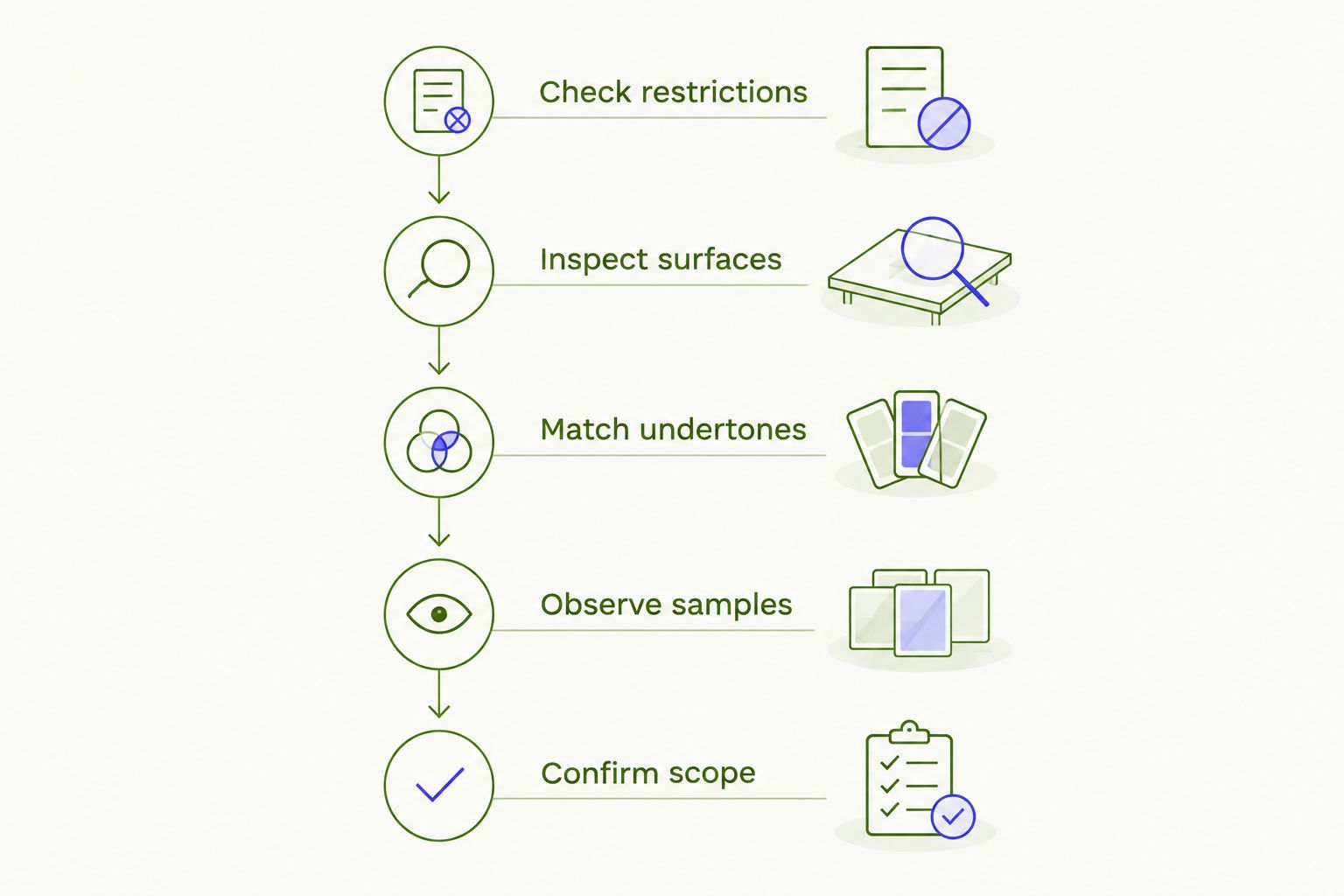
Keep the sample arrangement consistent. If you move one color into shade and leave another in direct sun, you are comparing different lighting conditions as well as different paint colors.
Coordinate the color decision with repairs
A new color does not repair a damaged substrate. Before requesting a quote, describe the affected surfaces, visible defects, retained finishes, and the areas you want included. Ask how preparation, repairs, coating selection, and application conditions will be addressed.
First Choice Renovation LLC handles small repairs as well as full remodels for homeowners and businesses. Its client-reported positioning emphasizes reliable communication, showing up, craftsmanship, experience, and competitive pricing. Competitive pricing is not a lowest-price guarantee.
For a 2026 project, contact First Choice Renovation LLC with photos and a written scope, then confirm which requested exterior tasks are included. If the work also involves a kitchen, bathroom, whole-home, or commercial renovation, identify those areas so the discussion covers the complete project.
Discuss your renovation and repair scope
Share your property, repair needs, and planned improvements to discuss the work and request a quote.
How these colors are ranked
The ranking prioritizes a light main-wall direction, compatibility with fixed materials, and a distinct purpose for each color family. Warm off-white is the default; the remaining options solve specific palette problems rather than compete for the same role.
This is a color-selection guide, not a coating durability test. Compare actual product specifications separately, including substrate suitability and application requirements. A familiar color name does not establish those properties.
Which desert exterior color should you choose?
Choose warm off-white unless your permanent materials give you a clear reason to choose something else. Move to sand beige for warm roofing, light greige for mixed finishes, or pale taupe when retaining a brown-based scheme. Reserve muted sage and terracotta for intentional accents.
For an undecided homeowner planning a 2026 update, the next move is a sample comparison—not another screen image. Narrow the main-wall choices, test them beside retained materials, and document the repair scope before approving the final palette.
FAQ
What's the best exterior paint color for a desert home?
Warm off-white is the default starting point for a light desert exterior. Compare it with your roof and masonry, and check whether it becomes too bright in direct sunlight.
Is beige better than gray for an Arizona exterior?
Beige is the better starting point for warm roofing, while light greige suits a mix of warm and cool finishes. Neither is automatically better without comparing the building's permanent materials.
Does lighter exterior paint keep a house cooler?
Lighter conventional finishes generally absorb less sunlight than darker finishes. Color alone does not establish a temperature or energy saving, and visible-light reflectance is not total solar reflectance.
What does LRV mean when choosing exterior paint?
LRV means light reflectance value and describes visible-light reflectance on a 0–100 scale. Use it to compare samples, not as a substitute for a coating's solar-reflectance information.
Should I use terracotta on every exterior wall?
Use terracotta selectively when your main objective is a light exterior. It works as a focal accent, but broad coverage creates a darker palette and can compete with red-toned roofing.
How should I test exterior colors before painting?
Compare samples on exposed and shaded surfaces and beside your dominant fixed material. Observe them in morning, midday, and late-afternoon light before confirming the palette.
Can I coordinate repairs with a larger renovation?
Discuss repairs and renovation work together with First Choice Renovation LLC. Describe the requested exterior tasks and any kitchen, bathroom, whole-home, or commercial work, then confirm the included scope before proceeding.
One last thing
Photographs are useful for recording a shortlist, but do not make the final decision from a phone screen. Camera exposure and display settings change the appearance of a color. Approve the physical sample on the property, beside the materials that will remain.