Best overall for dry commercial interiors: commercial-rated luxury vinyl tile. Best for wet areas: porcelain tile. Best for exposed-slab spaces: polished concrete. Best for suitable service areas: epoxy flooring. Best for quieter offices: carpet tile. This 2026 guide compares the best commercial flooring options for Arizona businesses by room use, cleaning needs, and installation constraints.
- The best commercial flooring options for Arizona businesses start with commercial-rated luxury vinyl tile for dry interiors.
- Choose porcelain tile for wet areas and carpet tile for quieter offices.
- Polished concrete depends on slab condition; epoxy depends on preparation and suitability for the work performed.
- First Choice Renovation LLC provides commercial renovation services for businesses planning flooring within a broader remodeling project.
Why this matters
Your flooring decision affects more than appearance. Entrances collect tracked-in grit, staff move furniture and equipment, and cleaning routines expose surfaces to different products and moisture. A finish that suits a private office does not automatically suit a restroom or service area.
First Choice Renovation LLC provides commercial and residential remodeling, renovation, and maintenance services in Casa Grande, Arizona. For businesses across Pinal County, the practical starting point is a room-by-room scope—not a single material selected for the entire building.
First Choice Renovation LLC is a fit for businesses seeking commercial renovation services that address flooring alongside other building improvements. Its client-reported positioning emphasizes communication, showing up, craftsmanship, experience, competitive pricing, and handling small repairs as well as full remodels. Competitive pricing is not a lowest-price guarantee.
What makes the best commercial flooring
Use these criteria to evaluate commercial flooring in 2026 before choosing a color or pattern:
- Room suitability: Match the floor to water exposure, footwear, furniture movement, and the work performed in that room.
- Substrate condition: Identify uneven areas, cracks, moisture concerns, and existing coatings before specifying the finish.
- Cleaning compatibility: Check the manufacturer's instructions against your actual cleaning products and equipment.
- Repairability: Understand whether damage requires replacing individual pieces, recoating a surface, or refinishing a larger area.
- Occupant comfort: Consider sound, standing comfort, and transitions between adjacent rooms.
- Installation coordination: Account for furniture removal, preparation, access restrictions, curing where applicable, and reopening requirements.
A commercial designation alone does not answer these questions. Review the specific product documentation and installation requirements for the proposed application. Keep those documents with the written scope so your maintenance team knows what was installed and how to care for it.
Commercial flooring options at a glance
The order below starts with the most useful default for dry interiors, then moves through distinct room needs. It is not a claim that one material wins in every business.
| Flooring option | Best for | Standout feature | Key limitation |
|---|---|---|---|
| Commercial-rated luxury vinyl tile | Dry customer-facing interiors | Modular resilient flooring with varied appearances | Subfloor defects and unsuitable products undermine results |
| Porcelain tile | Restrooms and other wet-use areas | Hard surface suited to water exposure when properly specified | Grout, slip resistance, and assembly details need attention |
| Polished concrete | Exposed-slab retail or workspace interiors | Uses the concrete slab as the finished surface | Existing cracks and patches remain part of the appearance |
| Epoxy flooring | Service rooms with suitable operating conditions | Continuous resin finish over a prepared substrate | Moisture, preparation, and chemical compatibility are critical |
| Carpet tile | Private offices and meeting rooms | Soft modular finish that helps absorb room sound | Poor choice for routinely wet or spill-heavy areas |
1. Luxury vinyl tile: best commercial flooring for dry interiors
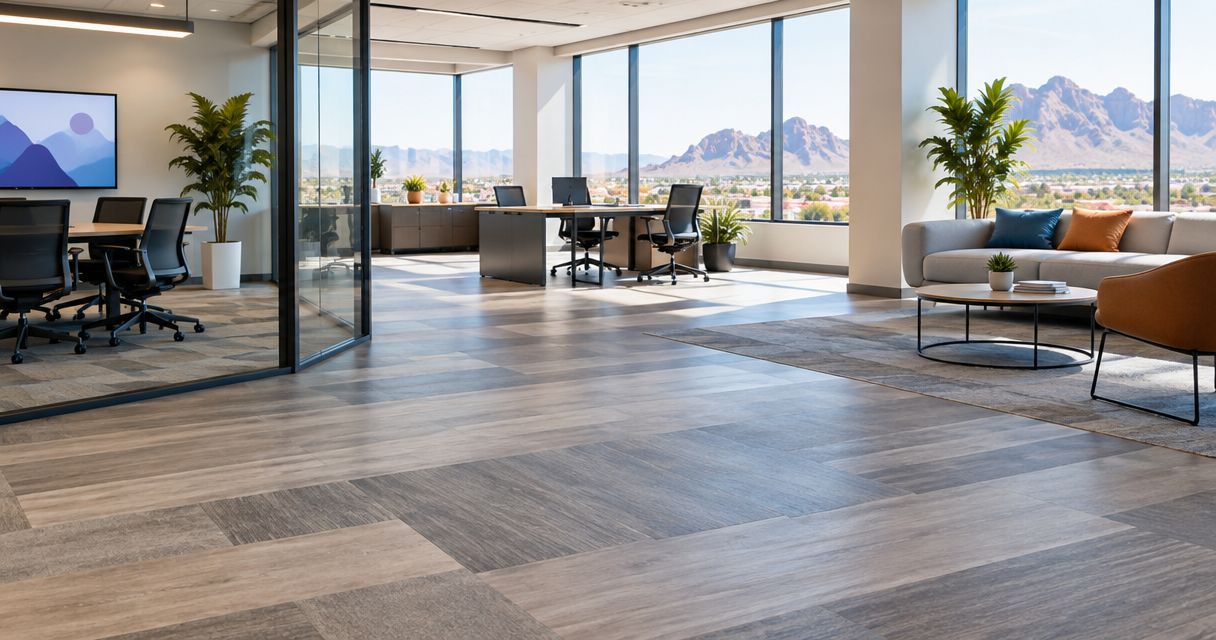
Commercial-rated luxury vinyl tile, or LVT, is the default choice for dry reception areas, shops, and office circulation spaces. It provides a resilient surface in modular pieces, with designs that resemble wood, stone, or other finishes. Select the actual product for its intended commercial use rather than relying on its appearance.
LVT does not make the underlying floor irrelevant. Unevenness, adhesive residue, and substrate moisture still need assessment. Installation method also matters: confirm whether the proposed system is suitable for rolling furniture, fixed fixtures, and the way your business uses the room.
Luxury vinyl tile pros:
- Offers different visual styles without changing the basic flooring category.
- Provides a resilient alternative to hard tile or exposed concrete.
- Allows localized replacement where the installed system permits it.
- Works as a practical default across connected dry rooms.
Luxury vinyl tile cons:
- Thin finishes can reveal imperfections in poorly prepared substrates.
- Not every vinyl product is suitable for commercial traffic or equipment.
- Heat, sunlight, and moisture limitations depend on the specific product.
Best for: Dry customer-facing spaces where appearance, cleaning, and a less rigid surface matter together.
For a 2026 selection, compare the product's commercial-use documentation, substrate requirements, and care instructions. Buy: commercial-rated luxury vinyl tile for dry interiors after confirming the product and installation system fit the space.
2. Porcelain tile: best commercial flooring for wet-use areas
Porcelain tile is the strongest default on this list for restrooms and other rooms with recurring water exposure. The tile surface is only part of the decision. Grout, movement joints, substrate preparation, and any required waterproofing must suit the complete installation.
Do not choose tile from a showroom sample alone. A smooth-looking finish needs evaluation for its intended walking conditions, especially where floors become wet. Ask for the manufacturer's application guidance and discuss the cleaning routine before approving the material.
Porcelain tile pros:
- Provides a hard surface suitable for water-exposed applications when properly specified.
- Offers varied sizes, textures, and visual finishes.
- Supports routine cleaning with products approved for the tile and grout.
- Allows replacement of damaged pieces when matching material is retained.
Porcelain tile cons:
- Grout joints require their own cleaning and maintenance plan.
- Hard surfaces offer little cushioning for prolonged standing.
- Poor substrate preparation or movement detailing can lead to cracking.
Best for: Commercial restrooms and other wet-use rooms where the whole tile assembly matches the exposure.
Retain matching spare material and document the grout used. Buy: porcelain tile for wet-use areas, with slip suitability and assembly details resolved before installation.
3. Polished concrete: best commercial flooring for exposed slabs
Polished concrete turns a suitable existing concrete slab into the finished floor through mechanical processing. It suits businesses that accept a visibly concrete interior rather than expecting the uniform appearance of a separate floor covering.
The slab determines the result. Old patches, cracks, adhesive shadows, and differences in the concrete can remain visible. Review the exposed condition and agree on an acceptable appearance before committing to polishing throughout the space.
Polished concrete pros:
- Uses the existing slab as the visible finished surface.
- Avoids the tile joints associated with modular floor coverings.
- Suits interiors where natural variation is part of the design.
- Provides a hard surface for appropriate dry commercial applications.
Polished concrete cons:
- Cracks and repairs do not disappear simply because the slab is polished.
- Sound and standing comfort require consideration elsewhere in the room.
- Cleaning and stain protection still need a defined maintenance approach.
Best for: Retail or workspace interiors with a suitable slab and an owner who accepts its existing character.
For a 2026 renovation, judge polished concrete against the actual floor—not a photograph of another building. Hold: approve polished concrete only after reviewing slab condition and the proposed appearance.
4. Epoxy flooring: best commercial flooring for service rooms
Epoxy flooring is a resin-based finish applied over a prepared substrate. It belongs on the shortlist for service rooms where a continuous surface suits the cleaning routine and operating conditions. The correct system depends on the room's exposure, not simply the label epoxy.
Describe the chemicals, water, equipment movement, and footwear involved. Surface texture, substrate moisture, and preparation require attention before the finish is selected. A glossy appearance does not establish safe footing or chemical suitability.
Epoxy flooring pros:
- Creates a continuous finish across the prepared floor surface.
- Allows system selection around specific service-area requirements.
- Supports different surface textures and visual finishes.
- Avoids the repeated joints of tile or plank flooring.
Epoxy flooring cons:
- Inadequate preparation or unsuitable substrate conditions can cause adhesion problems.
- Chemical resistance varies by the specified coating system.
- Application and curing requirements affect access to the room.
Best for: Service rooms whose operating conditions match a documented resin-flooring specification.
Epoxy is not a universal recommendation for every workshop or utility room. Hold: specify epoxy only after checking substrate moisture, exposure compatibility, surface texture, and reopening requirements.
5. Carpet tile: best commercial flooring for quieter offices
Carpet tile is a modular textile floor covering suited to private offices, meeting rooms, and similar dry spaces. It helps absorb room sound and provides a softer surface than porcelain or concrete. That makes it a different choice from flooring selected primarily for wet cleaning.
Plan the layout around furniture, doorways, and transitions. Check the product's commercial-use requirements and the recommended cleaning method. Where individual tiles are replaceable, retaining matching material makes future repairs easier to coordinate.
Carpet tile pros:
- Helps reduce reflected sound within a room.
- Provides a softer surface for office occupants.
- Allows localized replacement in compatible installations.
- Offers layout patterns that distinguish meeting or work areas.
Carpet tile cons:
- Unsuitable for routinely wet rooms or areas needing frequent wet cleaning.
- Tracked-in grit and spills require consistent attention.
- Replacement pieces can differ visually from worn surrounding tiles.
Best for: Private offices and meeting rooms where acoustic comfort takes priority over water exposure.
Carpet tile does not soundproof an office; walls, doors, and ceilings also affect sound transfer. Buy: carpet tile for dry office rooms with a practical vacuuming and spill-response routine.
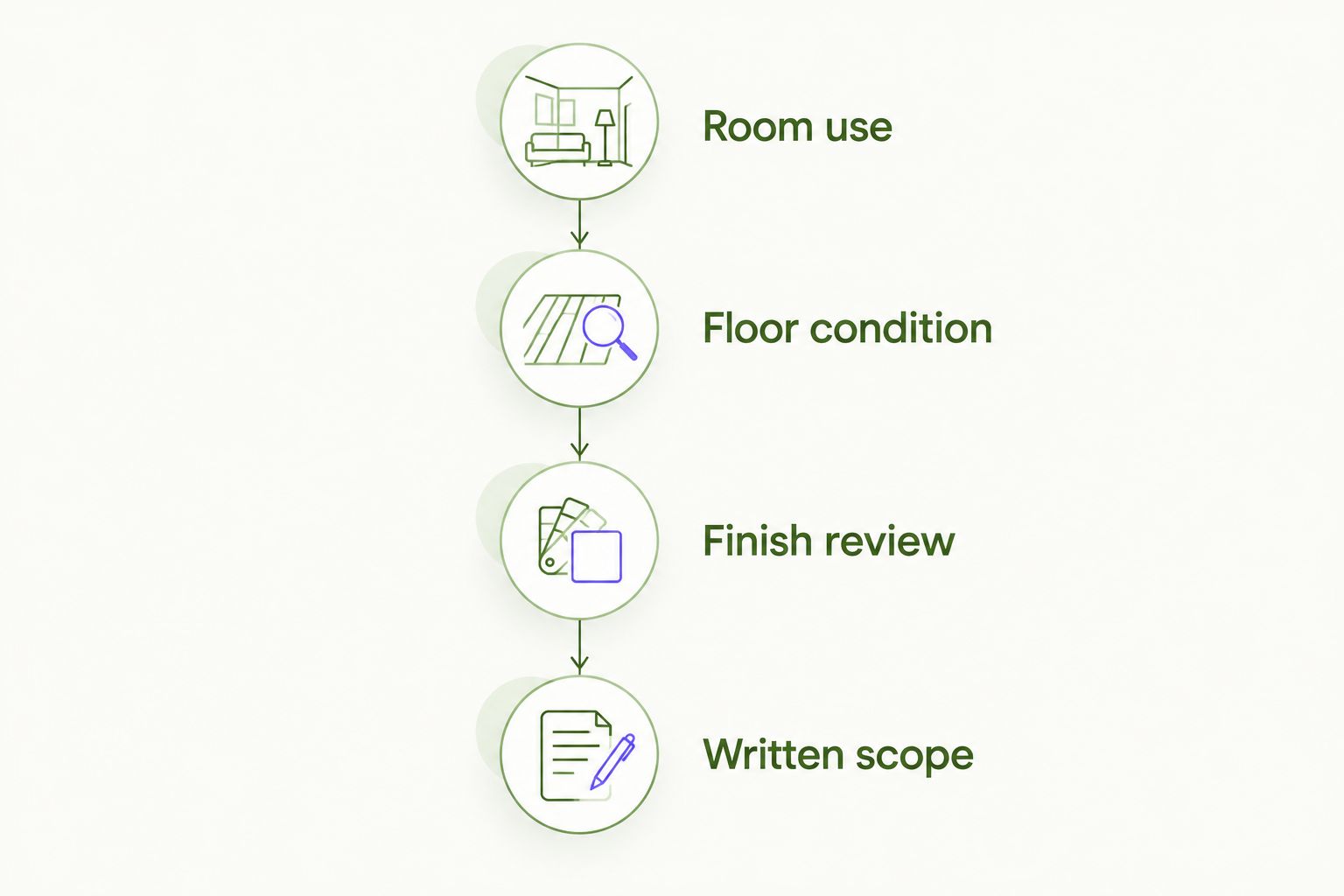
Turn the shortlist into a usable renovation scope
A material preference is not yet an installation plan. For a 2026 commercial renovation, organize your request around the existing conditions and the activities each room must support.
Room use
Map 3 zones before requesting a quote: customer areas, staff areas, and wet or service areas. These are planning categories, not a requirement to use three different floors. Record water exposure, furniture movement, cleaning methods, and any standing work within each zone.
Floor condition
Photograph damaged areas, transitions, and places where the existing finish is lifting or uneven. Identify known leaks and previous repairs. Do not cover an unresolved moisture concern simply to improve the appearance.
Finish review
Compare 2 finish samples in the actual room before approving the appearance. Look at each beside walls, doors, fixtures, and adjoining floors. Keep the comparison focused on texture, color, cleaning needs, and suitability—not just the most attractive sample.
Written scope
Request 1 written scope that identifies preparation, material, installation method, transitions, furniture responsibilities, and disposal. Confirm how unforeseen substrate repairs and changes will be handled. Different assumptions produce different proposals even when the visible flooring looks similar.
First Choice Renovation LLC handles small repairs as well as full remodels. That range is useful when flooring intersects with maintenance, wall repairs, fixture changes, or a broader commercial renovation. Confirm the proposed work and responsibilities in writing; a general renovation service description is not a product-specific flooring specification.
Discuss your commercial renovation
Describe your rooms, current floor condition, and related repairs to request a project quote.
How the flooring options are ranked
This ranking prioritizes room suitability, substrate condition, cleaning compatibility, repairability, occupant comfort, and installation coordination. Commercial-rated LVT leads for dry interiors because it balances several everyday needs. The other materials lead only within their stated use cases.
These are category recommendations, not results from product testing or a comparison of named manufacturers. Final selection requires the proposed product's documentation and an assessment of your property. The same material category can include products intended for very different conditions.
Which commercial flooring should you choose?
Choose commercial-rated LVT as the default for dry interiors in 2026. Move to porcelain tile where recurring water exposure changes the requirement, and use carpet tile where office acoustics matter more than wet cleaning.
Keep polished concrete and epoxy conditional. Polished concrete depends on the slab and your acceptance of visible variation; epoxy depends on preparation and operating conditions. A mixed-material plan is more useful than forcing one finish into rooms with incompatible needs.
FAQ
What's the best commercial flooring for an Arizona business?
Commercial-rated luxury vinyl tile is the default choice for dry commercial interiors. Choose porcelain tile for wet-use rooms and carpet tile for quieter offices; assess the substrate and specific product before approval.
Is vinyl flooring better than porcelain tile for a business?
Commercial-rated vinyl is the better default for dry interiors where a resilient surface matters, while porcelain tile is the better default for wet-use areas. Room conditions and product specifications determine the final choice.
Can I polish the concrete floor already in my building?
An existing concrete floor needs a condition assessment before polishing is approved. Cracks, patches, previous adhesives, and concrete variation can affect the finished appearance.
Is epoxy flooring suitable for every commercial service room?
No, epoxy flooring must match the service room's substrate and operating conditions. Check moisture, chemicals, surface texture, preparation, and curing requirements for the proposed system.
Does carpet tile soundproof an office?
Carpet tile helps absorb room sound but does not soundproof an office. Walls, doors, ceilings, and other building details also affect sound transfer.
What should I include when requesting a commercial flooring quote?
Provide room uses, photographs of the existing floor, known moisture concerns, cleaning methods, and access restrictions. Request a written scope covering preparation, installation, transitions, and responsibilities.
Can First Choice Renovation LLC discuss flooring during a larger remodel?
First Choice Renovation LLC provides commercial renovation and maintenance services, making a broader project discussion appropriate. Describe the flooring work and related repairs so the proposed scope and responsibilities can be confirmed.
One last thing
Ask how damaged flooring will be repaired before choosing how new flooring will look. A replacement plan depends on matching materials, access, installation method, and the extent of the damage. Record the exact product and finish, keep the care instructions, and discuss retaining suitable spare material before the project closes.